

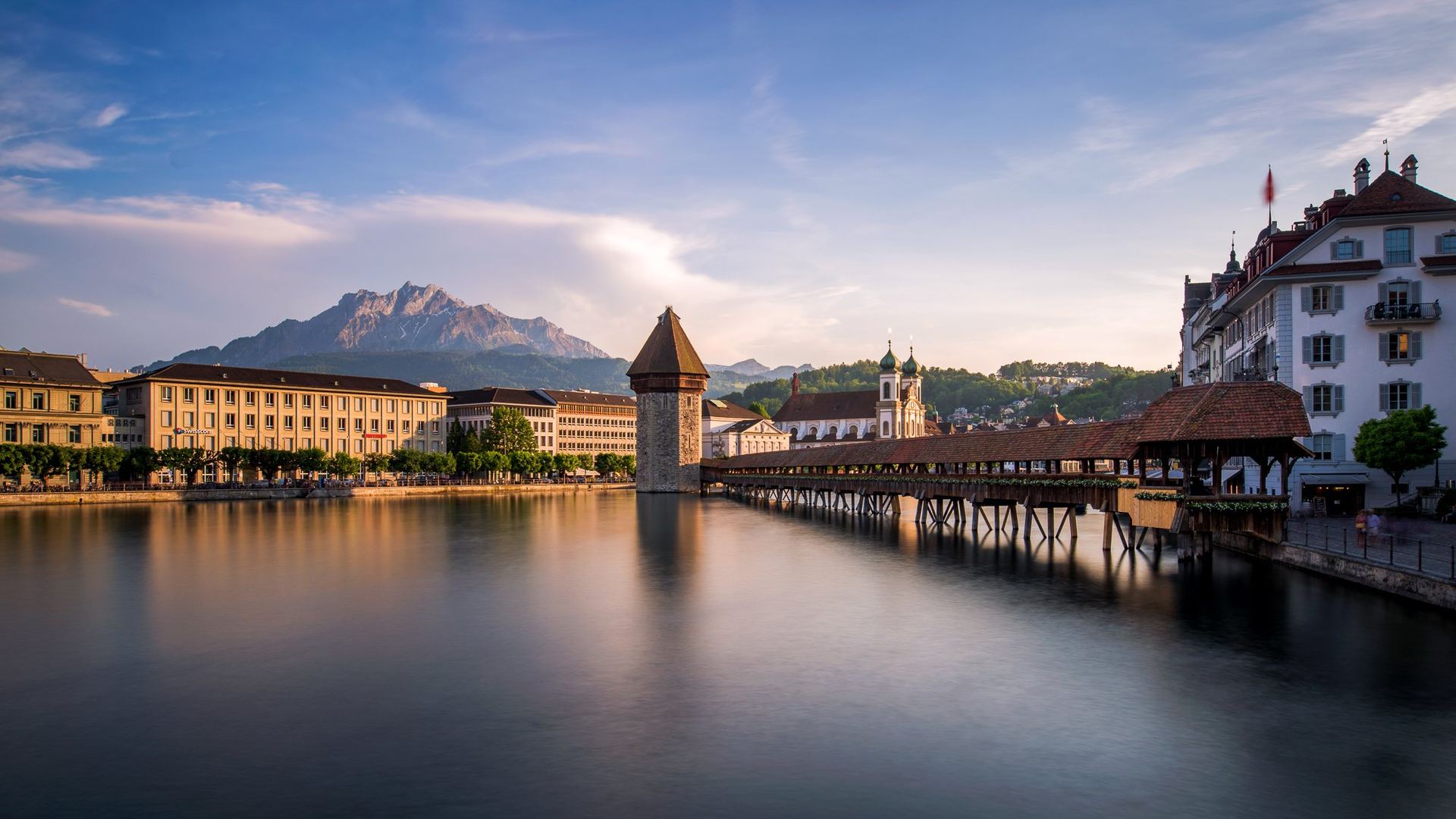
Traditional Swiss food is regional: cheese dishes such as fondue and raclette from the French-speaking west and the Valais, rösti, veal and sausages in the German-speaking north, air-dried beef and nut tart in Graubünden, and risotto and polenta in Italian-speaking Ticino. Four languages, four kitchens, one small country.
We cook and teach in Lucerne, right in the middle of it all, so here's our short guide to 22 dishes worth knowing, with where they come from and what's actually in them. No recipes, just enough to order well and understand what you're eating.
Swiss food at a glance
| Dish | Region | In one line |
|---|---|---|
| Cheese fondue | Fribourg, Vaud | Melted cheese and wine, bread for dipping |
| Raclette | Valais | Melted cheese scraped onto potatoes |
| Rösti | Bern | Crisp grated-potato cake |
| Zürcher Geschnetzeltes | Zurich | Veal strips in cream and mushroom sauce |
| Älplermagronen | Central Switzerland | Pasta, potatoes, cheese, apple sauce |
| Luzerner Chügelipastete | Lucerne | Puff pastry with veal meatballs in cream sauce |
| Bündnerfleisch | Graubünden | Air-dried beef |
| Bündner Nusstorte | Graubünden | Caramelised walnut tart |
| Risotto and polenta | Ticino | Rice and cornmeal dishes from the south |
French-speaking Switzerland and the Valais
Cheese country. Fondue and raclette come from here, along with a handful of dishes most visitors never hear about.
- Cheese fondue · Fribourg, Vaud, the whole country
- Cheese melted with white wine in a caquelon, kept warm over a flame, eaten by dipping cubes of bread on long forks. The Fribourg moitié-moitié uses half Gruyère, half Vacherin fribourgeois.
- Raclette · Valais
- A half wheel of semi-hard cheese is heated and the melted layer scraped onto boiled potatoes, with pickled onions and gherkins. Raclette du Valais is a protected (AOP) cheese.
- Papet vaudois · Vaud
- Leeks and potatoes cooked slowly into a soft stew, served with saucisson vaudois, a smoked pork sausage with protected status (IGP).
- Malakoff · Vaud (Lake Geneva)
- Fritters of cheese on bread, deep-fried until crisp outside and molten inside.
- Meringues with double cream · Gruyère region, Fribourg
- Crisp meringues, egg white and sugar dried in the oven, served with the thick double cream of Gruyère.
- Cholera · Valais
- A covered pie of potatoes, leeks, apples and cheese, a farmhouse dish from the Goms valley.
German-speaking Switzerland
Potatoes, veal, sausages and baked goods. This is where most of the country lives, and most of the classics on a Swiss menu come from.
- Rösti · Bern, now everywhere
- Grated potatoes fried in butter into a golden cake. Eaten as a side, or as a meal with a fried egg, cheese or bacon.
- Zürcher Geschnetzeltes · Zurich
- Thin strips of veal in a creamy white wine and mushroom sauce, traditionally served with rösti.
- Älplermagronen · Central Switzerland and the Alps
- "Alpine herdsmen's macaroni": pasta and potatoes baked with cheese, cream and fried onions, with apple sauce on the side.
- Berner Platte · Bern
- A large platter of boiled and smoked meats and sausages over sauerkraut, beans and potatoes.
- St. Galler Bratwurst · St. Gallen
- A white sausage of veal and pork, usually grilled or fried. It carries protected (IGP) status.
- Basler Läckerli · Basel
- Small rectangular spice biscuits rich in honey, almonds and candied lemon and orange peel, with a thin sugar glaze.
- Birchermüesli · Switzerland, created around 1900
- Oat flakes soaked with fruit, lemon juice and milk or yoghurt. It goes back to Dr Maximilian Bircher-Benner, a physician born in Aarau in 1867.
- Zuger Kirschtorte · Zug
- A round layered cake soaked in kirsch (cherry brandy), its rim covered in toasted almonds and its top dusted with icing sugar in a diamond pattern.
- Zopf · German-speaking Switzerland
- A braided white bread made with milk and usually butter, the classic Sunday-morning loaf.
Lucerne and Central Switzerland
Where our students live and cook. Lucerne's own dishes are hearty, festive and often sweet-savoury.
- Luzerner Chügelipastete · Lucerne
- A puff-pastry case filled with small veal meatballs ("Chügeli") and mushrooms in a cream sauce, sometimes with raisins. A festive dish, eaten especially around carnival.
- Luzerner Birnenweggen · Lucerne
- A rolled pastry of yeast or puff dough with a filling of dried pears, often with nuts, dried fruit and spices such as cinnamon, aniseed and cloves.
Graubünden (the Grisons)
The mountain canton in the south-east, with three languages and a cuisine shaped by long winters.
- Bündnerfleisch · Graubünden
- Beef cured with salt and spices, then air-dried, never smoked. Sliced paper-thin. Protected (IGP).
- Capuns · Graubünden
- Chard leaves wrapped around a spätzle-style dough with pieces of dried meat, cooked in broth and milk and finished with cheese.
- Bündner Nusstorte · Engadine, Graubünden
- A flat, round shortcrust tart filled with caramelised walnuts and cream. It spread far beyond the canton from the late 1950s.
Ticino (Italian-speaking Switzerland)
South of the Alps the food turns Italian in spirit, built on corn, rice and chestnuts.
- Risotto · Ticino
- Creamy rice cooked in stock, a staple of the grotti, Ticino's rustic country restaurants, often served with a local sausage.
- Polenta · Ticino
- Cornmeal cooked slowly, often for an hour or more in a copper pot, served with braised meat, cheese or mushrooms.
Which Swiss cheeses should you know?
Cheese runs through half the dishes above. Gruyère AOP is a hard cheese made from raw milk in large wheels and ripened for at least five months; it's the backbone of most fondues. Emmentaler AOP is the one with the big holes. Vacherin Mont-d'Or AOP comes in a round spruce box and is soft enough to spoon. Raclette du Valais AOP is made to melt. AOP and IGP are Switzerland's protected-origin labels: they tell you where and how a product must be made.
Is Swiss food just cheese and chocolate?
No. Swiss cooking leans on what mountains and lakes provide: potatoes, dairy, cured meats, lake fish, apples, pears and walnuts, plus a serious baking culture. Every canton has its own breads, biscuits and festive pastries, and the Culinary Heritage of Switzerland inventory lists hundreds of them.
Tasting Swiss food while you study in Lucerne
Lucerne is a good base for eating your way through the country: Zurich is under an hour away by train, the Alps start at the lake shore, and Ticino is on the other side of the Gotthard. At the Diploma in Culinary Arts you train in European cuisine, garde manger, bakery and breads in seven professional kitchens, and your paid internships put you in Swiss hotel and restaurant kitchens where these dishes are cooked every day.
Still at high school? The two-week culinary summer camp (ages 16–19, 11 – 24 July 2027, CHF 3'900) includes Swiss specialties in its kitchen sessions. And if Swiss pastry is what you love, from meringues to Nusstorte, our sister site covers pastry and chocolate studies in Switzerland.
What this means for you
If you're visiting, order by region: fondue or raclette in the west, rösti and Geschnetzeltes in Zurich, a Chügelipastete in Lucerne, risotto in Ticino. If you want to cook this food professionally, see why Switzerland is a good place to study culinary arts and browse the programmes in Lucerne (and the official culinary arts overview on bhms.ch). More reading on our guides page.