

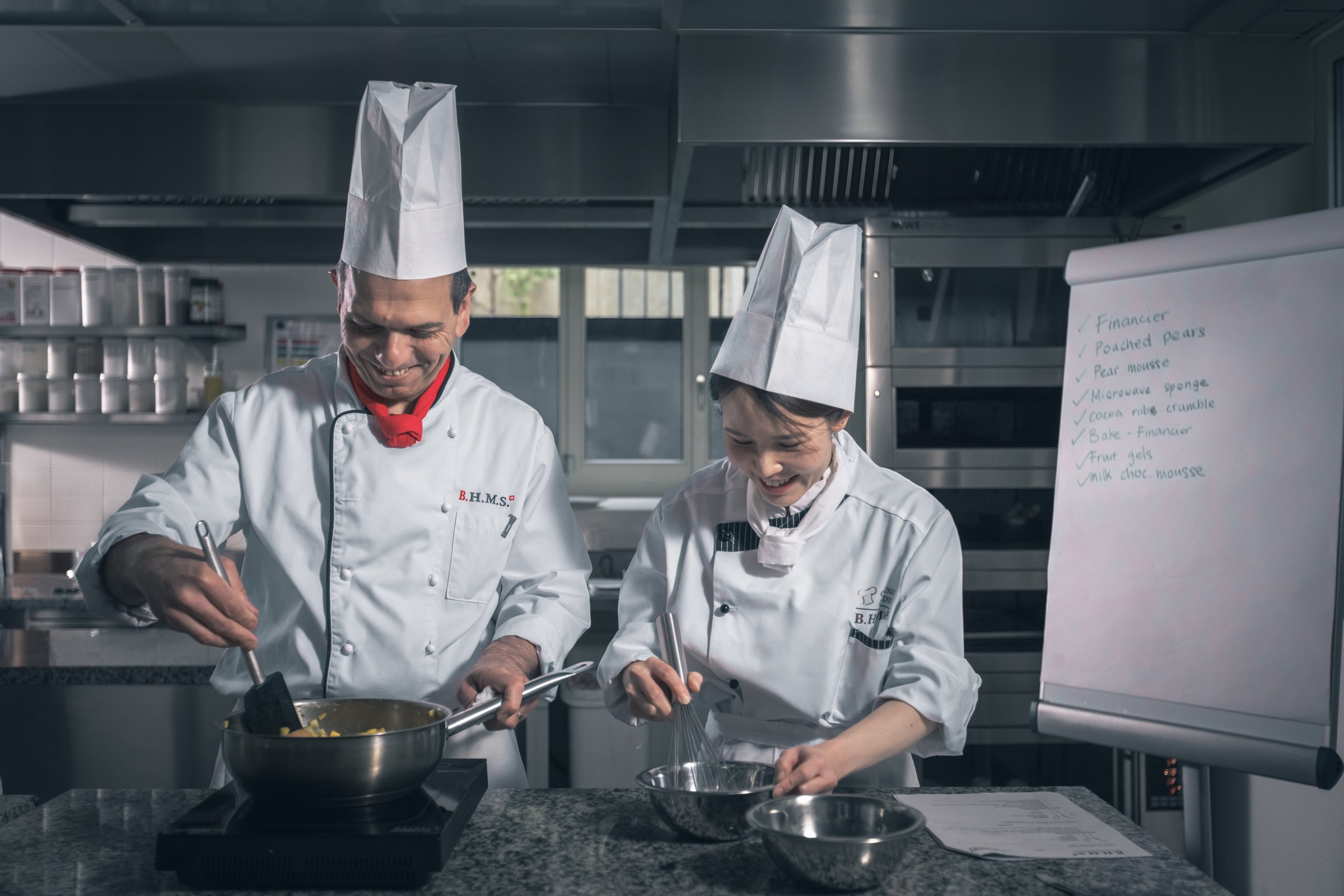
To become a chef, you learn the craft (on the job, through an apprenticeship or at culinary school), build several years of experience in professional kitchens, and work your way up from cook to sous chef to head chef. In the US there's no licence: the Bureau of Labor Statistics lists a high school diploma and five years or more of related experience as typical for chefs and head cooks.
So school is optional, experience isn't. What training changes is how fast you build skills, how many doors open, and whether you can run a kitchen as a business. Here's how the routes compare, and what each step looks like.
What does a chef actually do?
"Chef" covers several jobs. A professional kitchen is organised as a brigade, and you climb it:
- Cook / commis: prepares ingredients and cooks set dishes on one station.
- Chef de partie: runs a station, such as sauces, fish or pastry.
- Sous chef: the second-in-command, who supervises the cooks and reports to the head chef.
- Head chef / executive chef: oversees the kitchen, coordinates the sous chefs, and owns menus, costs and staff.
The higher you go, the more of the job is leadership and numbers rather than cooking. See what each level earns in our chef salary guide.
Do you need culinary school to become a chef?
No, and plenty of great chefs never went. But a good programme compresses years of trial and error. You learn the techniques in order, log assessed kitchen hours, get placements you couldn't get as a beginner, and leave with a qualification an employer recognises in any country. In Switzerland, qualifications are even built into the pay scale: the 2026 minimum for a cook with a three-year apprenticeship is CHF 4'528 a month, against CHF 3'713 without vocational training.
Which training route is right for you?
| Route | Length | What you get | Best for |
|---|---|---|---|
| On the job | open-ended | Wages from day one, skills depend on the kitchen | People who can find a strong mentor |
| Culinary certificate | 10 weeks at BHMS | Core techniques fast; no internship | Career changers, a first test |
| Culinary diploma | 1 year at BHMS | 270 kitchen hours plus a six-month paid internship | School leavers who want to work soon |
| Bachelor's degree in culinary arts | 3 years at BHMS | 600+ kitchen hours, 18 months of paid placements, management modules, a degree | Future head chefs and food entrepreneurs |
| Master's (after a degree) | 1 year | Business and start-up skills for food ventures | Graduates who want their own concept |
How to become a chef, step by step
- Get into a kitchen early. A part-time job as a prep cook or dishwasher shows you whether you like the pace, the heat and the hours.
- Choose your training. Decide between learning on the job and a structured programme. Compare all-in costs with our culinary school cost guide.
- Master the basics. Knife skills, stocks and sauces, butchery, baking, food safety and hygiene. Speed comes later; consistency comes first.
- Work real service. Placements in hotels and restaurants teach you what a classroom can't: a full board of tickets on a Saturday night.
- Move up the line. Run a station, then cover for the sous chef. Every step adds responsibility for people and food cost.
- Learn the business. Menu costing, purchasing, scheduling and leadership are what separate a great cook from a head chef.
- Find your direction. Hotel kitchens, fine dining, private chef work, product development or your own restaurant.
How long does it take to become a chef?
Training takes ten weeks to three years. Becoming a chef takes longer, because the title comes with responsibility: the BLS lists five years or more of related experience as typical. A three-year bachelor that includes 18 months of paid kitchen work gets a good part of that experience done during the degree.
The Swiss route: study and paid internships every year
At the Swiss Culinary Academy by BHMS in Lucerne, the culinary path is a ladder of three one-year steps, and each year ends with a full qualification:
- Year 1, Diploma in Culinary Arts: European cuisine, garde manger, bakery, breads, cakes and creams, then your first six-month paid internship.
- Year 2, Higher Diploma: international, Mediterranean and à la carte cuisine and chocolate work, then a second paid placement.
- Year 3, BA in Culinary Arts: management modules, a real event you run yourself, your third placement, and two bachelor degrees (BHMS and Robert Gordon University, UK).
You can stop after any year with a qualification in hand and come back later. Entry to Year 1 needs a completed secondary education and age 17 or above; teaching is in English. The Year 1 fee is CHF 40'200 (about US$48,600 at the October 2026 rate), with room, meals and insurance included.
Can you do a culinary internship abroad?
Yes, and in Switzerland it's paid by rule. Interns from recognised schools are entitled to a gross minimum of CHF 2'390 a month (2027 rate, about US$2,900), before board, lodging and social insurance. At BHMS, every programme year includes a six-month placement, in Switzerland or abroad, and the school handles the visa paperwork for international students. Each placement works like a six-month interview: strong interns often leave with references and job offers. See how the internships work.
What about becoming a pastry chef?
Pastry is a separate craft with its own training: doughs, chocolate, sugar work and bakery. If desserts are what you want to make, look at the dedicated Diploma in Pastry, Chocolate & Bakery on our sister site rather than a general culinary course.
What skills does a chef need?
- Precise technique and consistency under pressure
- Food safety, hygiene and allergen management
- Organisation: prep lists, mise en place, timing
- Stamina for long shifts on your feet
- Leadership and calm communication on a busy pass
- Numbers: recipe costing, ordering and waste control
What this means for you
If you're still at school, get a weekend kitchen job and see how it feels. If you're sure, pick a route that gives you real service hours early, ideally paid. To see the Swiss version up close, start with the programme ladder or apply online; admissions replies within 72 hours. The parent school's culinary arts overview on bhms.ch has the official programme details.